


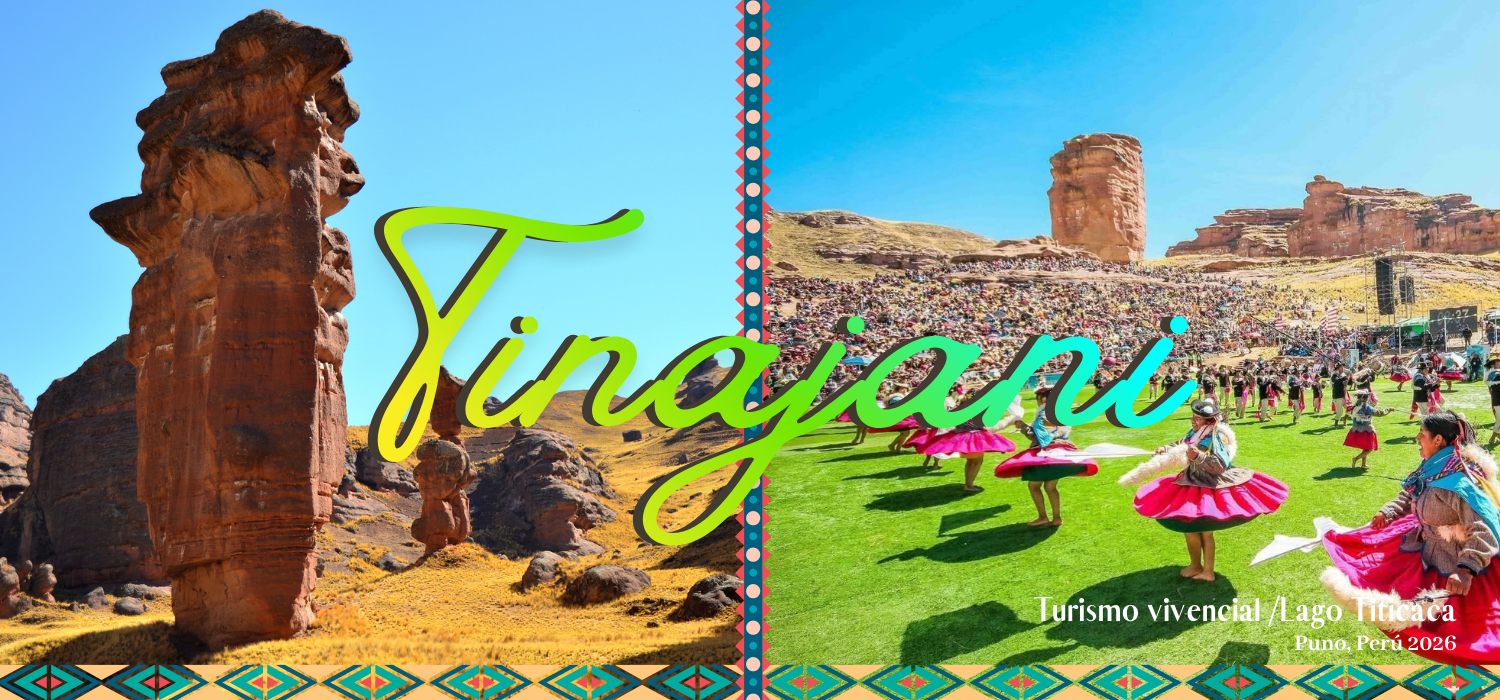
Tinajani Festival 2026: When the Canyon Becomes a Stage
Two days, an entire town, and a stone amphitheater millions of years in the making. The 28th National and International Tinajani Festival brings together dance, community, and landscape in one of the most authentic corners of rural tourism in Puno.
July 4 and 5, 2026
Festival dates
Cañón de Tinajani
Ayaviri District, Melgar
+200,000
Expected visitors
Discover Tours to Tinajani →
The Story Behind the Festival
A Canyon That Has Danced for 33 Years
The Cañón de Tinajani needs no introduction for those who know the highlands: its stone towers, sculpted by wind over millions of years, are already a destination in their own right. But every July, that landscape transforms into something more — a natural stage where dozens of communities showcase their dances, their attire, and their collective memory.
In 2026, the Provincial Municipality of Melgar organizes the 33rd edition of the Native Dances Competition alongside the 28th edition of the National and International Tinajani Festival — two events that have merged into a single grand celebration of rural and cultural tourism in the region.
For those traveling in search of something different from the usual tourist circuit, Tinajani offers what rural tourism promises better than anyone: real community, unfiltered landscapes, and a tradition sustained by conviction, not spectacle.
By the Numbers
| S/ 2M | Projected economic impact |
| 200K | Tourists expected |
| 70+ | Participating groups in 2025 |
| S/12K | Maximum prize for first place |
July 4 — Day 1
Tribute to Pachamama
The opening day belongs to the native dances of the Puno region: a visual and ritual homage to Pachamama (Mother Earth), where local communities present expressions passed down through generations. This is the most intimate moment of the festival — the one that best portrays Puno’s identity.
July 5 — Day 2
The Canyon Goes International
The second day opens its doors to national and international delegations, who arrive to compete and share the stage with local groups. The scale grows, but the canyon remains the same: imposing, natural, without a single artificial adornment.
Why It Matters
Rural Tourism Also Moves a Real Economy
Behind every dance lies a chain of family businesses, transport routes, and enterprises that depend on these two days. The festival doesn’t just preserve tradition — it sustains entire rural economies.
01
Transportation and lodging in Ayaviri and neighboring communities become fully activated during the festival.
02
Local gastronomy — from traditional picanterías to street stalls — experiences its peak season of the year.
03
Textile artisans find in the festival their largest showcase before national and international buyers.
04
Both formal and informal commerce in Melgar reactivates, generating direct income for hundreds of families.
Photo Guide
For Social Media Posts
8 Shots You Can’t Miss
Designed to tell the complete story of the festival in your feed — from landscape to gaze, from ritual to celebration. Follow this order and you’ll return home with material for an entire week of content.
01 · Arrival
Panoramic view of the canyon at sunrise
Wide shot of the stone towers in raking light, before the crowds arrive. Sets the stage for all the content that follows.
Best light: 6:30–7:30 am
02 · Preparations
Detail of costumes and accessories
Embroidery, feathers, hats, and masks before the parade begins. These are the textures that get lost in wide shots.
Macro or close zoom
03 · Portrait
Face of a dancer or elder dancer
An honest portrait, with the person’s permission, tells more than ten wide shots. Look for concentrated gazes before they go out to dance.
Always ask for permission
04 · Movement
Dance in full stride, with the canyon in the background
The composition that defines the festival: figures in motion against the rock formations. Worth waiting for the right angle.
Fast shutter speed
05 · Scale
Wide shot of the crowd and delegations
Shows the true dimension of the event: thousands of people in a natural amphitheater. Ideal for conveying the festival’s magnitude.
Find an elevated vantage point
06 · Community
Craft and gastronomy stalls
Life around the main stage: textiles, food, local commerce. This is the side of rural tourism that sustains everything else.
Natural light, no flash
07 · Delegations
Contrast between national and international groups
The second day offers the opportunity to showcase the diversity of costumes and styles arriving from other regions and countries.
Reserve for July 5
08 · Closing
Sunset over the empty canyon
A final, almost silent shot of the stage without the crowd. Closes the narrative with emotional contrast.
Best light: 5:30–6:15 pm
Before You Shoot
Many families participate out of tradition, not as a spectacle for cameras. Ask permission for portraits, avoid using flash near dancers, and always prioritize respecting the ritual over getting the shot.
How to Get There
Ayaviri is located just over 2 hours by road from the city of Puno.
The Cañón de Tinajani is approximately 25 km from Ayaviri’s center, with direct vehicle access.
It is recommended to leave early from Puno to arrive before the presentations begin.
Before You Travel
Bring warm clothing — afternoons in the highlands cool down quickly.
Sunscreen and a hat — altitude intensifies sun exposure during the day.
Extra battery and free storage space — the day provides plenty of content.
Experience Tinajani Without Worrying About Logistics
We coordinate transportation, local guides, and the best viewing points so your only task is to enjoy the festival.
Book your tour with Great Trip World
03/07/2026