


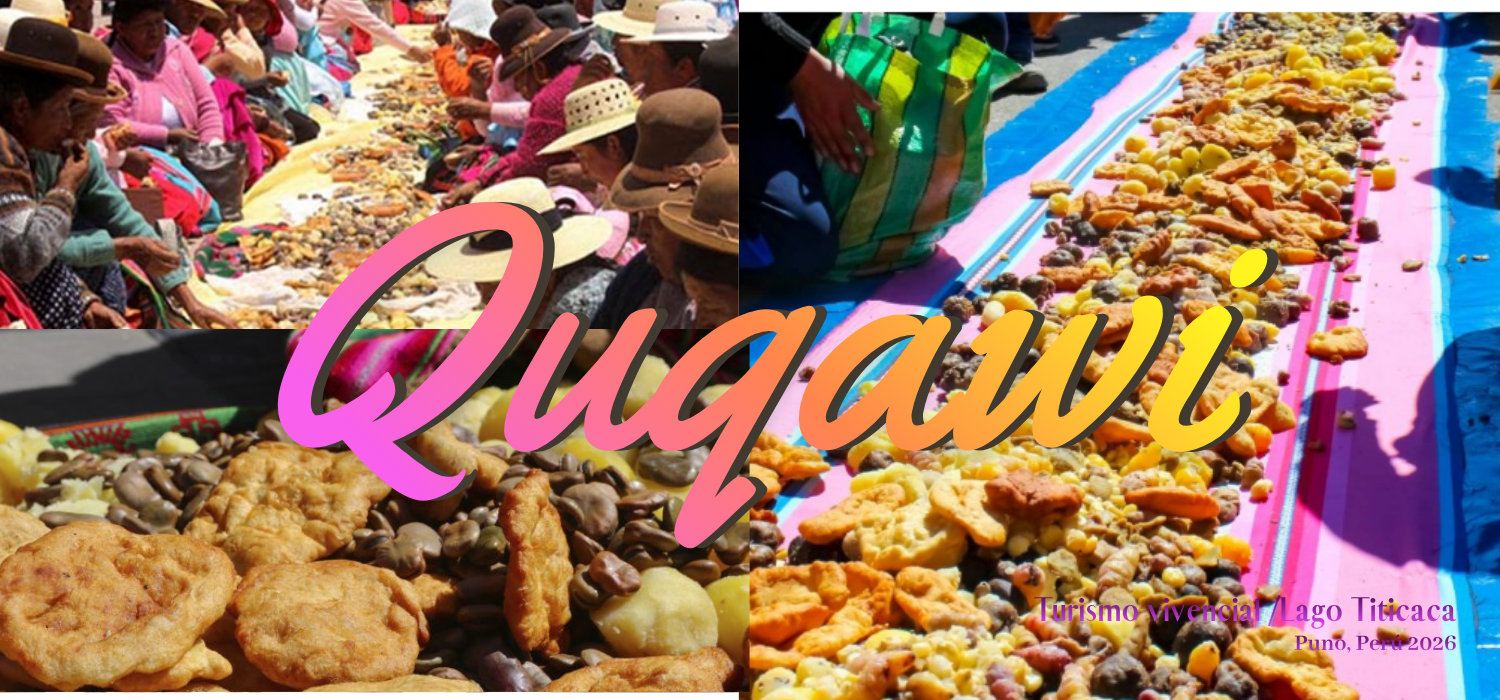
The Quqawi: the shared table that unites the altiplano
Some traditions don’t need a museum. The Quqawi is one of them — thousands of years of history that are still lived every time an Andean community brings its food together, places it at the center, and eats as one. Not as a gesture, but as a sacred act.
What is the Quqawi?
The Quqawi (also written Qoqawi) is an ancestral tradition practiced by Andean communities of the Peruvian altiplano for thousands of years. Its origins are deeply tied to agricultural work: when a community finished tilling the land, planting, or harvesting, they would gather to share joy and food together as a group.
The word comes from Aymara and Quechua, and describes the act of bringing home-prepared food to share with everyone. There is no host and no guest — everyone brings, everyone gives, everyone receives. It is reciprocity in its purest form.
Four Pillars of the Quqawi
| Unity | The Quqawi reaffirms the bonds between families and communities. Sharing the table means sharing life itself. |
|---|---|
| Gratitude | It is an act of thankfulness to the Pachamama for the fruits of the earth and the fruits of collective labor. |
| Identity | To practice it is to affirm who you are: a comunero of the Andes, heir to a civilization that built in community. |
| Sustainability | The foods of the Quqawi are local, native, and grown through traditional methods — eating this way means caring for the land. |
How It Works
During a Quqawi, each family or individual brings food prepared at home. Everything is placed in a common space — the center of the community hall, the village square, or a designated area in the field — and the whole community shares the meal in an atmosphere of joy and celebration.
It is not a silent banquet: traditional songs are sung, people dance to the rhythm of the tarqa (a traditional Andean flute), and topics important to the community are discussed — farming, livestock, future plans. It is gathering, celebration, and assembly all at once.
The Quqawi does not happen in a restaurant or on a fixed calendar date. It takes place after communal work in the fields, at community anniversaries, during local festivals, and whenever a community wants to strengthen its bonds.
The Foods of the Quqawi
The Quqawi table is a map of Andean biodiversity. Each product has a history, a name in Aymara or Quechua, and has nourished these communities for centuries.
🥔 Native potato — Boiled with skin. Puno has over 400 varieties.
🌽 Mote (Mut’i) — Cooked corn, served with fresh altiplano cheese.
🫘 Boiled fava beans — Tender or dried, with salt and chili. Native plant protein.
🧊 Chuño — Freeze-dried potato using Andean cold. The eternal food of the altiplano.
🐟 Trout & silverside — From Lake Titicaca, cooked or fried. Protein from the sacred waters.
🧀 Cheese — Fresh, from cow or alpaca milk. Accompanies nearly everything.
🐑 Lamb — Roasted or boiled. Sheep herding is part of the Andean landscape.
🌿 Chulo (totora) — On the lake islands: the tender, sweet stem of the totora reed, eaten raw.
The Quqawi by Region
While the essence remains the same, the foods vary depending on what each area of the altiplano produces:
| The Puno Altiplano | Native potato, chuño, mote with cheese, boiled fava beans. The most complete and diverse table, reflecting the agricultural richness of the highlands. |
|---|---|
| Islands of Lake Titicaca (Los Uros) | Fish huatia, boiled fish, boiled egg, roasted corn, and chulo — the tender shoot of the totora reed. The lake itself on the table. |
| Capachica and Amantaní Communities | A blend of lake and land: trout, silverside, native potato, fava beans, and local cheese. The most complete Quqawi on the Titicaca. |
Why the Quqawi Matters Today
In schools — Schools in Puno such as the Red Cabana have included the Quqawi in their Social Studies programs to keep it alive among youth.
In the world — The Gran Quqawi 2026 on Puno’s Plaza Mayor gathered thousands of people, becoming a living symbol of Andean unity.
For the land — By prioritizing native foods and traditional methods, the Quqawi actively promotes biodiversity and care for the Andean environment.
Experiencing the Quqawi as a Traveler
If you travel to Lake Titicaca, it is possible to participate in a community Quqawi on the islands or in the lakeshore communities — not as a spectator, but as a participant: bringing something, sharing the table, listening. It is one of the most honest experiences the altiplano offers to those who know how to seek it.
Want to Experience the Quqawi on the Titicaca?
Great Trip World organizes visits to Aymara communities in Taquile, Amantaní, and the Uros Islands where you can participate in traditions like the Quqawi. Contact our team and we’ll design the experience for you.
24/06/2026