


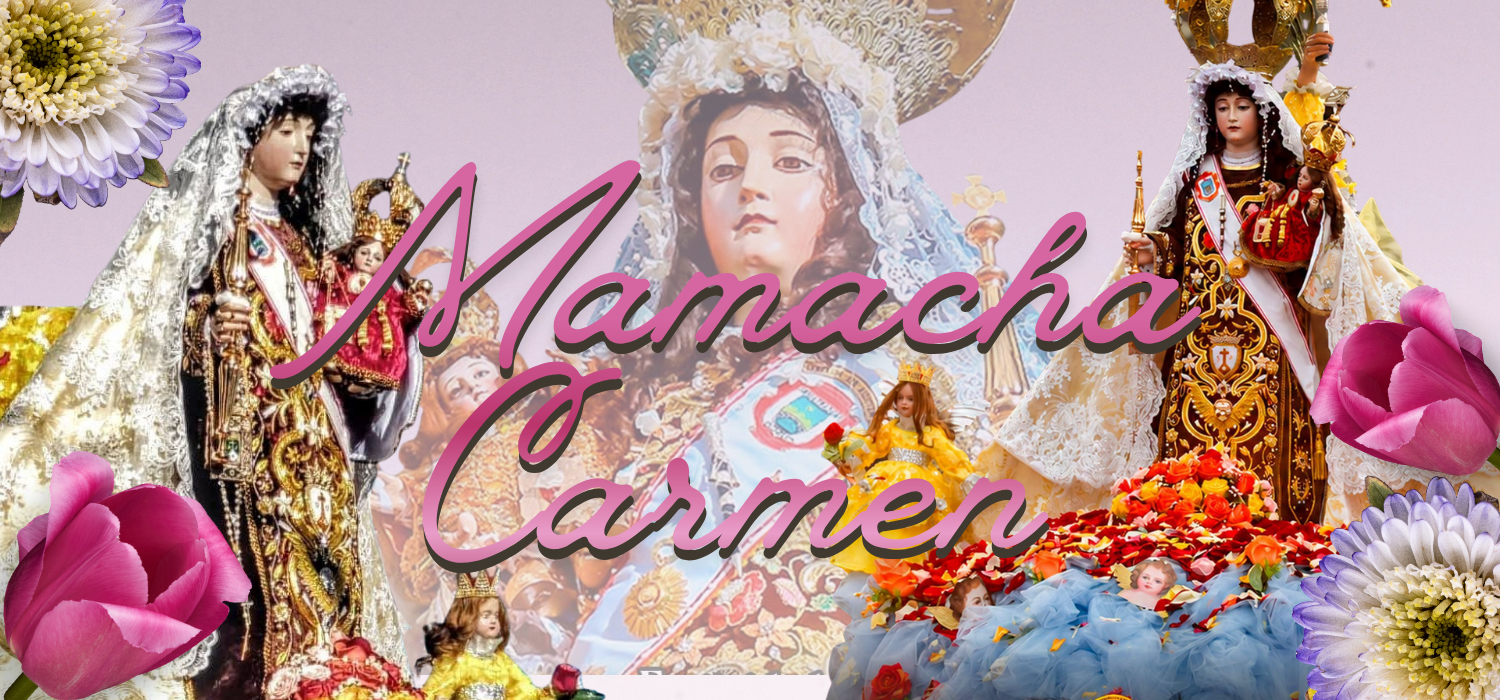
Mamacha Carmen: The Festival That Lights Up Paucartambo
In Paucartambo, they affectionately call her “Mamacha Carmen”: patron saint of the mestizos, protector of travelers, and declared patron saint of Peru’s folkloric dances. For four days, the town receives thousands of devotees and visitors from different parts of the country and the world to accompany her in masses, processions, fireworks, and a ritual battle between angels and demons that takes place right in the main square.
Tradition holds that the image appeared miraculously and that it was a devout traveler who brought it to Paucartambo, giving rise to a festival that today blends Catholic faith, colonial memory, and Andean roots in a single pulse.
1. July 15 – Eve of the Festival
The Entrance
A skyrocket announces the beginning. The bands play the first reveilles as the comparsas (dance troupes) make their entrance into town. At night, the “qonoy” (a bonfire) is lit, and the prioste (festival sponsor) offers a serenade to the Virgin that lasts until dawn.
2. July 16 – Central Day
The Heart of the Celebration
It begins at 5 a.m. with the Aurora Mass and continues at 10 a.m. with the Festive Mass, where the chants of the Qollas and the Qhapaq Negros resound. At 3 p.m., the grand procession sets out: the Virgin parades through the streets while the “saqras” (little devils) peek out from the rooftops.
3. July 17 – Blessing and Guerrilla
Memory and Ritual
After Mass, the comparsas visit the cemetery to remember the deceased dancers and then bring joy to the inmates of the town’s prison. In the afternoon, a second procession crosses the Carlos III Bridge, and in the main square, the traditional “guerrilla” between the Qollas and the Antis is reenacted.
4. July 18 – Kacharpari
The Farewell
The last day closes with the “Hoqarikuy,” the blessing of the children, and the “kacharpari”: a farewell danced with handkerchiefs in the main square, where each comparsa promises to return the following year.
The Comparsas
Dances That Tell the Town’s History
Qollas
Merchants from the highlands, with their monteras (traditional hats) and their “q’epi” (bundle) on their backs. According to tradition, they were the ones who found the image of the Virgin.
Qhapaq Negros
They evoke the enslaved people brought from the coast during the colonial period, faithful devotees of Mamacha Carmen.
Saqras
The “little devils” who climb onto rooftops and balconies to watch — and sometimes hide from — the procession.
Chunchus and Maqtas
They represent the peoples of the jungle; with leaps and acrobatics, they stage the “purgatory” on the eve’s night.
Before You Travel
Practical Information for Your Visit
How to Get There
Paucartambo is about 3 hours from the city of Cusco. You can get there by bus, shared van, or organized tour.
Climate and Altitude
The town is at over 3,000 meters (9,800 feet) above sea level. Bring warm clothing: the nights are cold even in the middle of the festivities.
What to Try
The Paucartambino “merienda”: roast guinea pig, lamb stew, broad bean kapchi, and stuffed rocoto peppers, served in the homes of the carguyoc (host families).
Nearby Bonus
If time allows, the Tres Cruces de Oro viewpoint offers one of the most spectacular sunrises in Cusco.
16/07/2026