


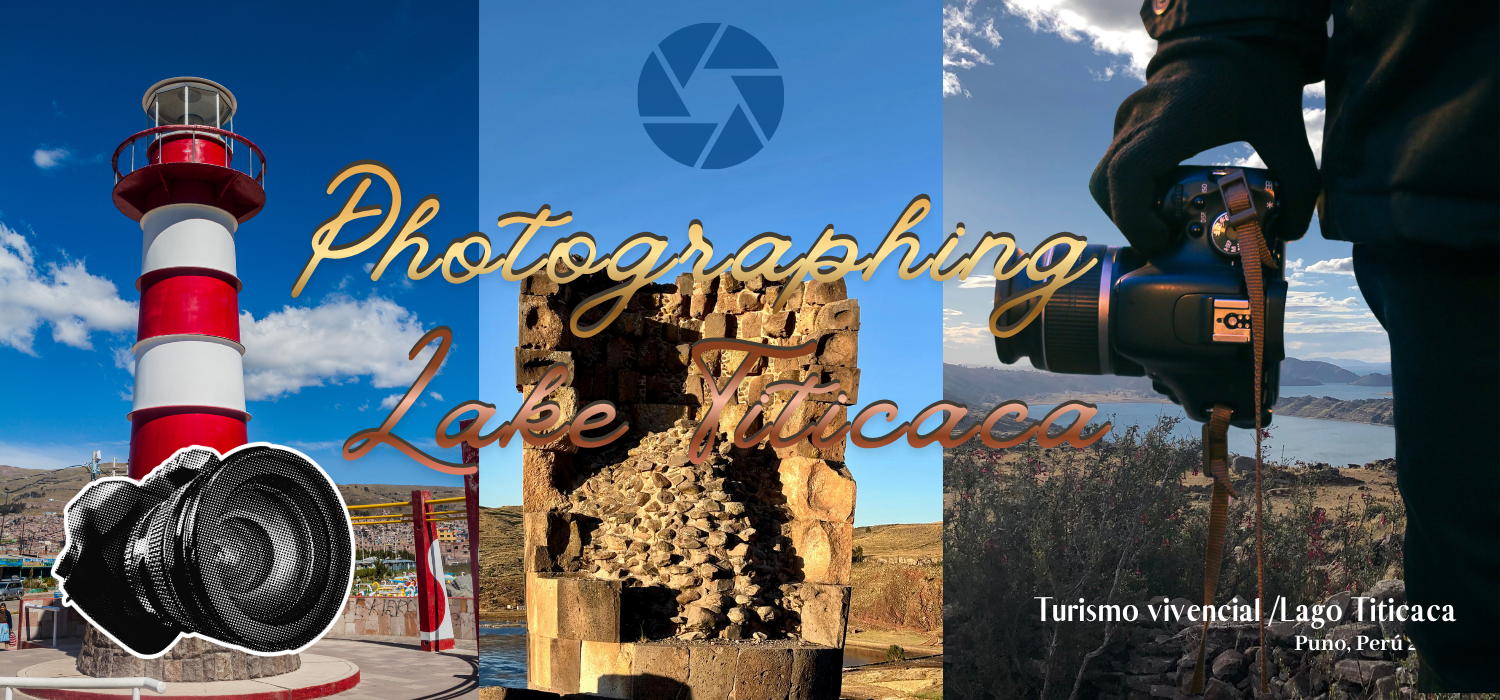
📷Photographing Lake Titicaca: The Best Moments and Places🌅
Lake Titicaca doesn’t need filters. At 3,812 meters above sea level, the light is different: more intense, cleaner, more dramatic. If you know when and where to shoot, every photo can look like it came from a dream.
The 4 Golden Moments of Light You Must Take Advantage Of
The difference between a photo of Titicaca and a great photo of Titicaca is almost always the time of day.
| Moment | Time | What Makes It Special |
|---|---|---|
| Golden Hour | 6:00–7:30 AM | Warm, raking light over the lake. Reeds and boats glow. |
| Late Morning | 8:00–10:00 AM | Saturated colors, deep blue sky, no fog. |
| Blue Hour | 5:30–6:30 PM | The sky becomes a mirror. Indigo and orange tones. |
| Night | From Amantaní | The Milky Way is visible to the naked eye. A must-capture. |
The 7 Best Places to Photograph Lake Titicaca
1. Sunrise / Sunset – The Puno Boardwalk (Malecón)
The starting point for everything. Early in the morning, when the mist clears over the lake and fishing boats begin to move, the boardwalk offers open views of the water with perfect reflections. Arrive before 6:30 AM.
2. All Day – The Uros Floating Islands
The visual contrast is striking: the orange-gold of dry reeds, the vibrant green of fresh ones, the indigo blue of the lake, and the colorful Aymara traditional clothing. Late morning delivers the most faithful colors. Always ask permission before photographing people.
3. Sunrise – Pachamama Hill, Amantaní
If you stay overnight on Amantaní — and you should — hike up Pachamama Hill before dawn. At 4,100 meters, you’ll see the lake stretch to the horizon with the first light of day. It’s one of the most epic views in the entire highlands.
4. Late Morning – Taquile Island
The Inca stone archways with the lake in the background are the iconic frame. Combine them with portraiture: Taquileño men knit while they walk, their textiles are declared a World Heritage Site, and the colors are extraordinary under the Andean light.
5. Sunset – Sillustani Burial Towers (Chullpas)
At sunset, the funerary towers of the Colla culture become dark silhouettes against the burning sky and the mirror-like Lake Umayo. The contrast between ancient stone and dramatic sky is hard to beat. Arrive 1 hour before sunset.
6. Golden Hour – On Board the Boat
The journey between islands isn’t just transportation — it’s a photographic opportunity. Titicaca’s water has a unique color — somewhere between cobalt blue and dark green — that turns into a golden mirror during the golden hour. Sit at the bow and keep your camera ready.
7. Night – Amantaní Without Electricity
The island has limited electricity. At night, far from any light pollution, the sky over Titicaca is one of the most photogenic in South America. Bring a tripod and set up long exposures: the Milky Way reflected in the lake is an image few people manage to capture.
Recommended Gear – What to Bring in Your Backpack
You don’t need professional equipment to take good photos on Lake Titicaca. But there are a few things that make all the difference.
| Equipment | Why You Need It on Titicaca |
|---|---|
| Wide-angle lens | To capture the vastness of the lake and dramatic skies without missing anything |
| 50mm or 85mm lens | Portraits of locals with the lake in the background, without distortion |
| Polarizing filter | Eliminates reflections on the water and saturates the blue of the sky. Essential at 3,800 m |
| Compact tripod | For sunrises, night photography, and long exposures over the lake |
| Extra batteries | The cold drains batteries quickly. Always carry 2 spares |
| Waterproof bag | Boats splash. Cameras and lakes are not good friends |
Practical Tips Before You Shoot
Ask Permission
Always ask before photographing people, especially on the islands. A gesture of respect that opens doors.
The Light Is Stronger
At 3,800 m, the atmosphere is thinner. The sun burns fast: wear a hat and protection, and expose at -1/3 EV at midday.
Minimal Editing
Titicaca’s colors are so rich that they barely need editing. Be careful with oversaturation.
Night Photography
ISO 1600–3200, aperture f/2.8, exposure 20–25 seconds. The Milky Way over the lake justifies the tripod.
Ready to Photograph Lake Titicaca?
At Great Trip World, we organize tours to the Uros, Amantaní, Taquile, and Sillustani with early morning departures to make the most of the best light.
12/06/2026