


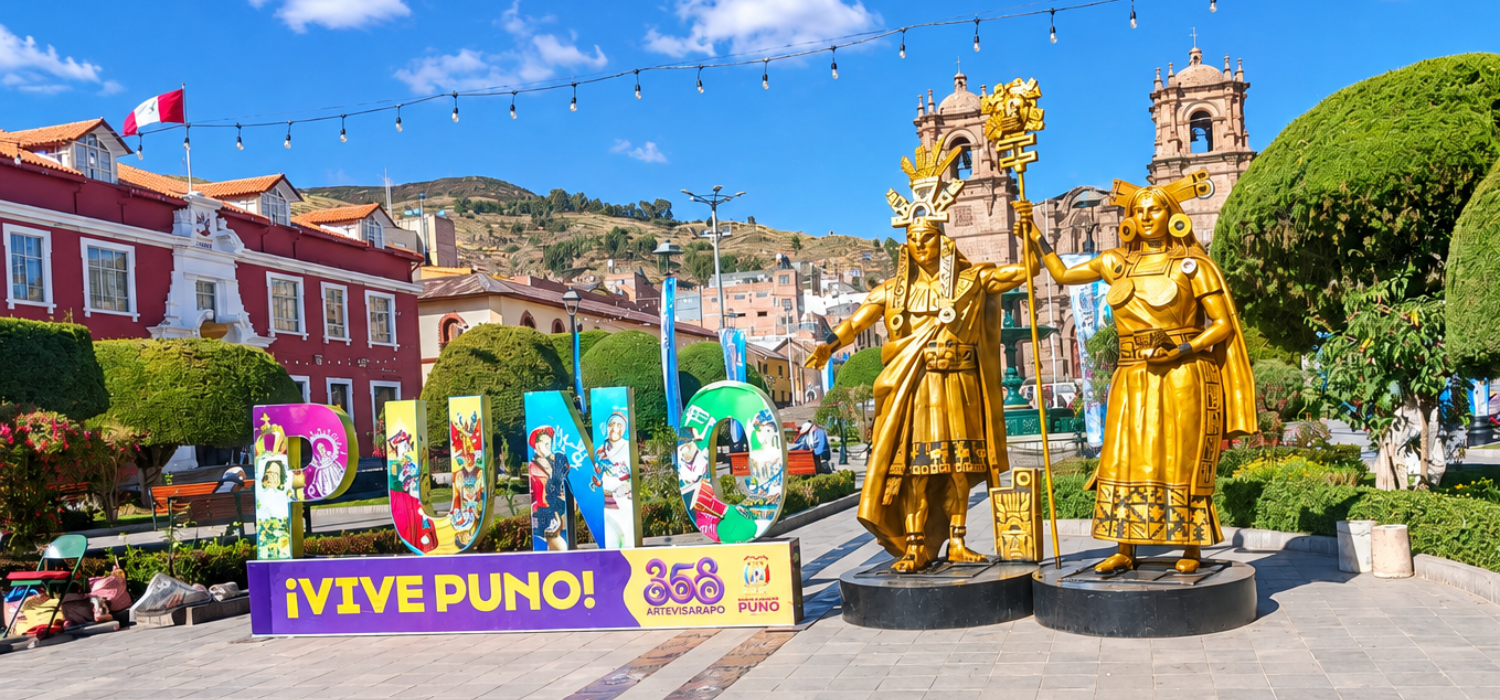
Puno Anniversary: 358 Years of History, Culture, and Tradition Beside Lake Titicaca.
Puno Turns 358: Discover Its History, the Best Tourist Attractions, the Typical Food You Must Try, and Tips for Visiting the Capital of Peruvian Folklore with Great Trip World.
Puno Turns 358: A City Celebrated with Pride
Every November, the city of Puno dresses up for a celebration. On November 4, 1668, Viceroy Conde de Lemos founded the city under the name San Juan Bautista de Puno, and today, 358 years later, it remains one of Peru’s most special destinations: at over 3,800 meters above sea level, on the shores of the world’s highest navigable lake, Lake Titicaca.
Puno is not just a dot on the map. It is the cradle of one of the country’s richest cultural expressions, the home of Quechua and Aymara culture, and the city recognized as the Capital of Peruvian Folklore. Here, colonial history, Andean traditions, music, dance, and a gastronomy with flavors you won’t find anywhere else all coexist.
In this blog, we tell you how Puno’s anniversary is celebrated, which places you can’t miss, which typical dishes you have to try, and how to plan your trip to make the most of your visit. Join us! 🏔️
A Bit of History: From Legend to the Spanish Founding
To understand Puno, you need to know its two origins: the mythical and the historical.
The mythical founding. According to Andean legend, Manco Cápac and Mama Ocllo, the children of the Sun sent to found the Inca Empire, emerged from Lake Titicaca. This story is a fundamental part of Puno’s identity and is proudly remembered during the November celebrations, with cultural events, performances, and parades that pay tribute to this origin.
The Spanish founding. On November 4, 1668, the city was founded as San Juan Bautista de Puno, in a region that was already important for its mining activity and its strategic location between Cusco, Arequipa, and Upper Peru. Over the centuries, Puno became a meeting point of cultures, and that blend is reflected today in its architecture, its festivities, and its people.
How Is Puno’s Anniversary Celebrated?
November is a very special month to visit the city. During the anniversary days, Puno usually fills with activities that celebrate its identity:
Parades and street processions through the main streets of the center, with institutions, schools, and cultural groups.
Typical dances of the highlands, such as the morenada, the diablada, the sicuris, the waca waca, and many more, which show why Puno is considered the folkloric capital of the country.
Live music, with bands, zampoñas, quenas, and groups that liven up plazas and parks.
Food and craft fairs, ideal for trying typical dishes and taking home an authentic souvenir.
Civic acts and ceremonies in the Plaza de Armas, where the city pays tribute to its history.
📌 Activities and exact dates may vary each year. We recommend checking the official schedule or writing to us so we can help you organize your trip.
Tourist Attractions You Must Visit in Puno 📍
1. Plaza de Armas and Puno Cathedral
The heart of the city. The Plaza de Armas is the perfect starting point to get to know Puno. There you’ll find the Cathedral, a gem of mestizo baroque completed in the 18th century, with a carved stone façade that deserves a leisurely photo. At night, the plaza comes alive and is ideal for walking, having a coffee, or simply observing the Puno atmosphere.
2. Jirón Lima
The liveliest pedestrian street in the city. Here you’ll find restaurants, cafés, craft shops, travel agencies, and plenty of activity at all hours. It’s perfect for an evening walk, trying something delicious, and feeling the pulse of Puno.
3. Arco Deústua
A stone monument honoring the heroes of the battles of Junín and Ayacucho. It’s a classic stop on the tour of the city center and a historic symbol of Puno.
4. Huajsapata Viewpoint (Puma Uta)
A natural balcony with one of the best panoramic views of the city and the lake. At the top stands the monument to Manco Cápac, which recalls the legend of the mythical founding. Go up at sunset and you’ll see the Titicaca tinted with colors.
5. Kuntur Wasi Viewpoint (Condor)
Another must-see viewpoint, with a monumental sculpture of a condor with open wings and a spectacular view of Puno Bay. It’s an ideal spot for photographs, especially in the afternoon light.
6. Parque Pino and Central Market
To experience the daily life of the people of Puno: fruits, cheeses, quinoa, chuño, medicinal herbs, and lots of color. It’s an authentic experience for those who enjoy local culture.
7. City Museums
If you want to better understand the history and culture of the highlands, visit museums such as the Carlos Dreyer Museum and the Coca and Customs Museum. They are an excellent way to complement your tour of the city.
8. Puno Port and the Yavari
Boats to the lake’s islands depart from the port. Very close by, you can visit the historic Yavari ship, one of the oldest steamships on the lake, which now operates as a museum.
The Jewels of Lake Titicaca 🚤
No trip to Puno is complete without getting to know the lake. These are the most recommended experiences:
Floating Islands of the Uros
Built entirely from totora, a plant that grows in the lake, the Uros islands are one of Puno’s symbols. You’ll be able to learn how their families live, how they build their islands and boats, and take home handmade crafts.
Taquile Island
Famous for its traditional weaving, recognized as Intangible Cultural Heritage of Humanity by UNESCO. Its inhabitants preserve ancestral customs, and it’s very common to see men weaving while they walk. It also has incredible views of the lake.
Amantaní Island
Ideal for those seeking a immersive experience. Here you can stay with a local family, share their meals, learn about their daily life, and enjoy one of the most beautiful sunsets in the highlands from its viewpoints.
💡 Recommendation: If you have little time, the full-day tour to Uros and Taquile is perfect. If you want a deeper experience, choose the 2-day, 1-night tour with Amantaní.
Beyond the City: Must-See Tours Near Puno 🗺️
Chullpas of Sillustani
About 30 minutes from the city, next to the Umayo lagoon, are these impressive pre-Inca funeral towers. It is one of the most important archaeological sites in the region and a magical place to watch the sunset.
Quechua Route
A cultural tour through Lampa, Pukará, and other points of interest in the highlands, ideal for those who want to learn about the history and traditions of the Quechua world.
Aymara Route
A journey along the southern shore of the lake toward Chucuito and Juli, with sites such as the Temple of Fertility and other attractions of Aymara culture, as well as very photogenic landscapes.
Tiahuanaco (Bolivia)
For those who want to go one step further, you can also visit the important archaeological site of Tiahuanaco, in Bolivia, through a private tour from Puno.
Typical Food of Puno: Flavors You Must Try 🍽️
Puno’s gastronomy is a product of the altitude, the lake, and Andean tradition. These are the dishes that cannot be missing from your visit:
🐟 Titicaca Trout
The queen of the Puno table. Fresh, juicy, and prepared in many ways: fried, grilled, with garlic, on the grill, or as ceviche. It is the most recommended dish for anyone visiting the lake.
🍲 Quinoa Pesque
A traditional dish made from cooked quinoa with a creamy consistency, usually accompanied by cheese. It is very nutritious, comforting, and very typical of the highlands.
🥣 Quinoa Soup
Perfect for Puno’s cold days. It is light, nutritious, and prepared with vegetables and, sometimes, meat. Ideal for lunch.
🍖 Kankacho
Roasted lamb (or goat), marinated with spices and served with potatoes, a recipe with a lot of Puno tradition. A hearty dish much enjoyed at celebrations and gatherings.
🥘 Puno Chairo
A traditional soup with meat, chuño, potato, vegetables, and wheat. It is a complete, abundant dish representative of Puno’s Andean cuisine.
🥔 Chuño and Native Potatoes
Chuño, a potato naturally dehydrated by the cold and sun of the highlands, is an essential part of local cuisine. Along with the great variety of native potatoes, it accompanies many dishes.
🦙 Alpaca
Alpaca meat is lean, tender, and low in fat. You’ll find it in chicharrón, grilled, or in various stews in the city’s restaurants.
🍞 Huatia
Potatoes cooked under hot earth, prepared during festivities and celebrations. A very typical experience enjoyed with cheese and ají.
☕ To Accompany
Coca tea: the traditional ally against altitude sickness.
Api with buñuelos: a thick, hot drink made from purple corn, perfect for cold mornings.
Cheeses and bread from the highlands: highly recommended in local markets.
Crafts and Souvenirs: Take Puno with You 🧶
Puno is famous for its crafts. During your visit, be sure to look for:
Alpaca garments (sweaters, scarves, ponchos, hats).
Traditional textiles, such as those from Taquile.
Totora crafts from the Uros islands.
Masks and costumes from typical dances, handmade.
Ceramics and decorative items with Andean motifs.
Buying directly from artisans is a way to support local families and take home an authentic souvenir.
Tips for Visiting Puno in November 🎒
Acclimatize slowly. Puno is at about 3,800 m above sea level. Rest the first few days, drink plenty of water, eat light, and drink coca tea.
Wear layers. During the day there can be strong sun and at night it’s cold, even in November.
Don’t forget sunscreen, sunglasses, and a hat. Radiation in the highlands is intense.
Carry cash (soles). On the islands and in markets, cards aren’t always accepted.
Book in advance. During celebration dates, tourist visits increase, and hotels and tours fill up faster.
Respect local customs. Ask permission before photographing people and enjoy each tradition with respect.
Travel with a trusted agency. That way you ensure transfers, guides, and good planning without worries.
How Many Days Do I Need to Get to Know Puno?
| Time | What You Can See |
|---|---|
| 1 day | City tour of downtown Puno or full-day tour to Uros and Taquile |
| 2 days | Uros, Amantaní, and Taquile (2D/1N) or Uros + Taquile + Sillustani |
| 3 days | City of Puno, lake islands, Sillustani, and a cultural route (Quechua or Aymara) |
| 4 days or more | All of the above, plus immersive experiences on the lake and excursions to Bolivia |
Celebrate Puno’s 358 Years with Great Trip World 💙
At Great Trip World, we love sharing the magic of Puno with travelers from all over the world. We help you put together the ideal trip: tours to Lake Titicaca, Uros, Taquile, Amantaní, Sillustani, cultural routes, and packages with accommodation included.
This anniversary is the perfect moment to discover a city full of history, music, and tradition! 🎶
📲 Book today and request a quote for your tailor-made trip:
🌐 www.greattripworld.com
📞 +51 984 481 521
📞 +51 951 753 244
Happy anniversary, Puno! Happy 358 years. ✨
04/11/2026